
Month-End Accounting
Use this checklist to review the period before closing General Ledger transactions. Adapt the sequence to your organization's accounting policy.
Before you begin
- Confirm the period end date and the cut-off policy.
- Ask operational teams to finish or identify incomplete sales, purchasing, inventory, manufacturing, payroll, and fixed-asset transactions.
- Ensure you have permission to post adjustments and close the period.
Recommended sequence
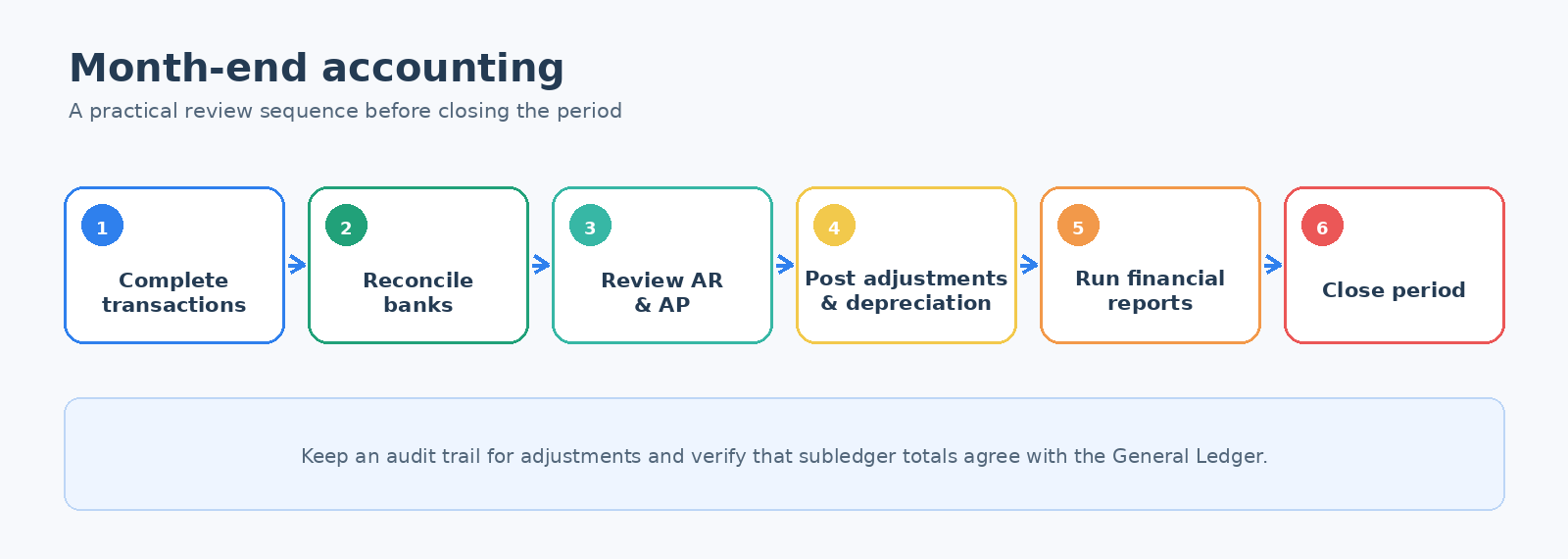
- Complete and review transactions. Find unposted, unapproved, uninvoiced, or outstanding documents.
- Reconcile bank accounts. Match bank activity and investigate unexplained differences.
- Review receivables and payables. Check aged balances, unapplied payments, credit notes, and unusual supplier or customer balances.
- Review inventory and production. Investigate negative stock, unusual adjustments, open work orders, and valuation exceptions.
- Post recurring and adjusting entries. Include accruals, prepayments, depreciation, payroll, exchange differences, and approved corrections as applicable.
- Run financial reports. Review Trial Balance, profit and loss, balance sheet, and supporting reports.
- Close the period. Use Closing GL Transactions only after review and approval are complete.
Final checks
- Subledger control totals agree with General Ledger.
- Bank reconciliation differences are explained.
- Suspense, clearing, and temporary accounts have expected balances.
- Adjusting entries have descriptions and supporting documents.
- Reports are saved according to your audit and retention policy.
Important: Closing a period affects which transaction dates users can post. Communicate the cut-off and reopening procedure before closing.